
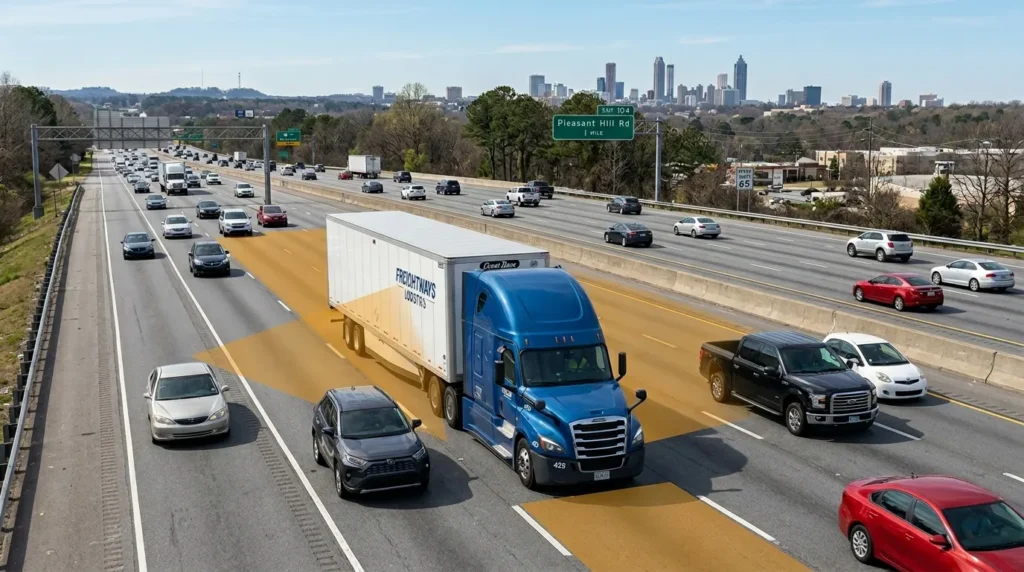
Understanding Truck Blind Spots: A Crucial Safety Concern
When sharing the road with large commercial trucks, drivers and riders alike must be aware of truck blind spots. These areas around trucks where the driver cannot see other vehicles pose significant risks for accidents. In this article, we’ll explore the dangers of truck blind spots, how to identify them, and offer safety tips to reduce the risk of collisions.
The reality is that trucks have significantly larger blind spots than regular passenger vehicles. This can make it difficult for truck drivers to detect smaller vehicles in close proximity. As a result, drivers need to be extra cautious when traveling near trucks.
What Are Truck Blind Spots?
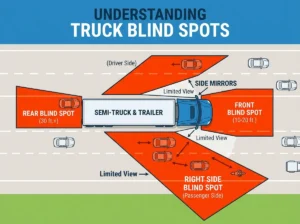
Truck blind spots are areas surrounding a large truck where the truck driver has limited or no visibility. These spots can vary depending on the size and configuration of the truck, as well as the height of the vehicle and the position of the driver’s mirrors. In general, these blind spots are much larger than those of regular vehicles.
Key Areas to Watch Out For
- Front Blind Spot: The area directly in front of the truck, where the driver cannot see vehicles that are too close.
- Rear Blind Spot: Trucks have limited visibility behind them, especially when another vehicle is in close proximity.
- Left and Right Blind Spots: These are areas on the truck’s left and right sides where the driver may not see smaller vehicles or motorcyclists.
By identifying these areas, drivers can understand where it is dangerous to linger, especially for extended periods of time.
How to Identify Truck Blind Spots
To help avoid truck blind spots, it is essential to know where they are. Understanding these areas can significantly reduce your risk of accidents. Here’s how you can identify the blind spots around trucks:
- Front Blind Spot: If you cannot see the truck driver’s mirrors, you are likely in their front blind spot. This area is often underestimated because it is directly in front of the truck. However, if the driver can’t see you in their mirrors, they may not be able to anticipate your movements.
- Rear Blind Spot: If you are following a truck too closely, the driver may not be able to see you in their mirrors. Additionally, when driving in this area, you reduce your visibility of the truck’s braking actions, which could lead to rear-end collisions.
- Side Blind Spots: Trucks have large blind spots on either side, especially on the right side where the passenger side mirror may not be able to capture your vehicle. If you’re passing a truck on the right, always ensure you have a clear view of the driver’s mirrors before moving back into the lane.
What Happens When You Are in a Truck’s Blind Spot?
Being in a truck’s blind spot can be dangerous for both the truck driver and other road users. For example, if the truck driver cannot see you, they might change lanes unexpectedly, causing a collision. In other cases, they may attempt to make turns or merges without realizing that another vehicle is too close to them.
This situation can be even more hazardous for motorcyclists, cyclists, and pedestrians because of the larger size of trucks. Small vehicles are often harder to spot, and truck drivers may be unaware of their presence in blind spots.
Tips for Safely Navigating Truck Blind Spots
Now that we know where truck blind spots are, let’s discuss how drivers can stay safe on the road:
1. Maintain a Safe Distance
When driving near a large truck, always try to maintain a safe distance. This is particularly important when traveling in the truck’s front or rear blind spots. Allow enough space for the truck driver to maneuver and avoid dangerous situations. As a general rule, you should maintain at least four seconds of following distance between your vehicle and a truck, especially when driving in poor weather conditions.
2. Pass Safely and Swiftly
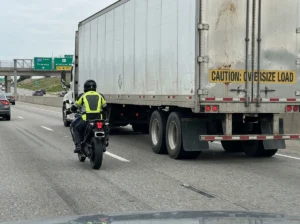
If you need to pass a truck, do so quickly and safely. Make sure you can see the truck driver’s mirrors before pulling back in front of the truck. Avoid lingering in the truck’s blind spots for an extended period of time. Always accelerate smoothly and try to pass as quickly as possible while maintaining a safe distance.
3. Never Tailgate
Tailgating is one of the most dangerous behaviors when driving behind trucks. Not only does it reduce your reaction time, but it also places you in the truck’s rear blind spot, where the driver can’t see you. Always maintain a safe following distance of at least four seconds. This gives you enough time to react if the truck makes a sudden stop or change of direction.
4. Use Proper Signals
When changing lanes, always use your turn signals early and clearly. This will alert the truck driver to your intentions and help them make safe decisions. Keep in mind that large trucks take longer to stop and have wider turning radii, so signaling in advance gives the truck driver more time to adjust.
5. Be Cautious in Poor Weather
Rain, snow, fog, and other poor weather conditions can exacerbate the risks of truck blind spots. Be extra cautious in these conditions and reduce your speed to stay out of the truck’s blind spots. Visibility is already compromised during adverse weather, so taking precautions like driving more slowly and allowing extra space is essential for your safety.
Why Blind Spot Awareness Is Vital for All Road Users
While truck drivers must take precautions to eliminate blind spots, it’s also crucial that other drivers understand and avoid these areas. Whether you’re driving a car, motorcycle, or bicycle, being aware of truck blind spots can help prevent serious accidents.
For Motorcyclists
Motorcyclists are especially vulnerable to truck blind spots. Because motorcycles are smaller, they can be difficult for truck drivers to see, especially when they are riding on the right side or directly behind the truck. It’s critical that motorcyclists make themselves visible and avoid riding in blind spots whenever possible. Motorcyclists should also be cautious when entering or leaving freeway on-ramps, as they may enter a truck’s blind spot when passing by.
For Passenger Vehicles
Passenger vehicles are often at risk when driving near large trucks. Drivers must always make it a habit to check their surroundings before merging or changing lanes, especially when passing large trucks. It’s also important to note that trucks have large side mirrors, so staying in their direct line of sight as much as possible is crucial. If you can’t see the truck driver’s mirrors, they likely cannot see you.
Conclusion: Prioritize Safety Around Trucks
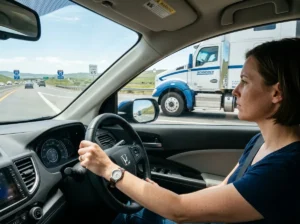
Truck blind spots present a significant hazard on the road, but by staying informed and practicing safe driving habits, we can all reduce the risks of accidents. Whether you are in a passenger vehicle, on a motorcycle, or driving a truck yourself, the key is awareness.
Stay vigilant, keep your distance, and always be mindful of your position relative to large trucks on the road. Remember, being safe around trucks is not just about avoiding accidents—it’s about protecting lives.
For more information on how to stay safe while driving, visit Truck Accident Law Firm.
Contact Our Truck Accident Lawyers
Need help with a truck accident case? Call (888) 488-1391 or complete the “Do I Have A Case?” form to schedule a free initial consultation.
[Image 1 here]
For additional tips on truck accident prevention, read our article on The Role of Trucking Companies in Accident Prevention.
Learn more about truck regulations and safety updates from the Federal Motor Carrier Safety Administration (FMCSA).