
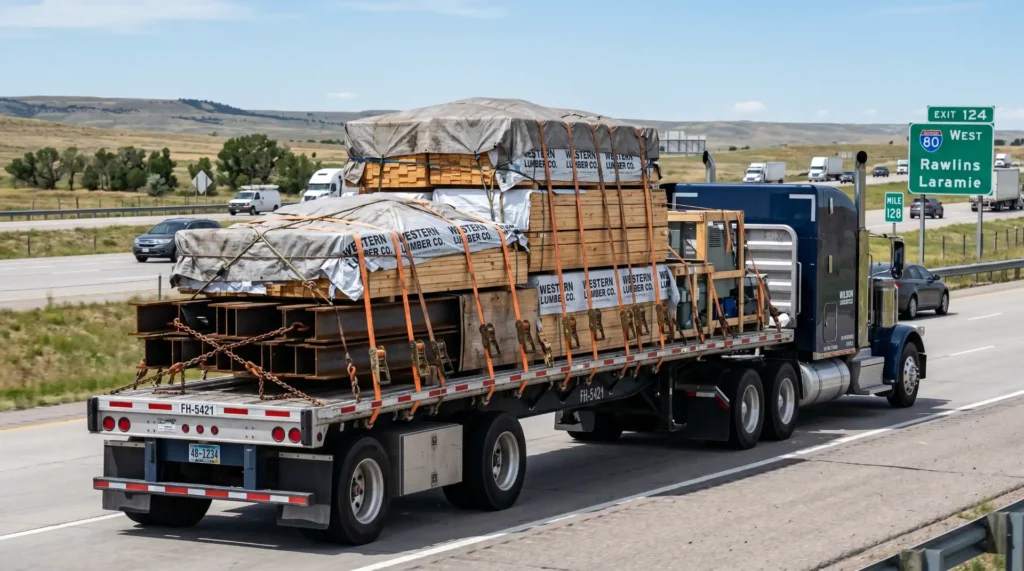
Every day, commercial trucks transport millions of tons of freight across the United States. These shipments keep businesses running, store shelves stocked, and supply chains moving. While most cargo reaches its destination without incident, improperly secured freight can create dangerous conditions that place everyone on the road at risk.
Cargo securement failures remain a significant concern within the trucking industry. When cargo shifts, falls, spills, or becomes unstable during transportation, serious truck accidents can occur. These crashes often result in severe injuries, extensive property damage, and lengthy highway closures. Understanding how cargo securement failures happen and the role they play in truck accidents can help drivers recognize potential hazards and better understand liability issues when collisions occur.
What Are Cargo Securement Failures?
Cargo securement failures occur when freight is not properly restrained, balanced, or secured inside or on a commercial vehicle. Federal regulations require trucking companies and drivers to use appropriate methods to prevent cargo from moving during transport. Despite these requirements, mistakes still happen throughout the loading and transportation process.
Cargo can shift due to sudden braking, sharp turns, changes in speed, poor loading practices, damaged equipment, or inadequate restraints. Even a relatively small shift in weight can affect how a truck handles on the road.
When cargo moves unexpectedly, the truck’s center of gravity can change. This may reduce stability, increase stopping distance, and make it more difficult for the driver to maintain control.
Why Proper Cargo Securement Matters
Commercial trucks often carry loads weighing tens of thousands of pounds. The movement of even a fraction of that weight can significantly affect vehicle performance.
Proper cargo securement helps maintain vehicle stability during normal driving conditions and emergency maneuvers. It also prevents freight from falling onto roadways and creating hazards for surrounding traffic.
When cargo is secured correctly, the weight remains balanced throughout the trip. This helps drivers navigate curves, traffic congestion, weather conditions, and sudden stops more safely.
Failure to properly secure cargo can transform a routine delivery into a serious safety threat.
Common Causes of Cargo Securement Failures
Cargo securement failures rarely stem from a single mistake. In many cases, multiple factors contribute to the problem.
One common issue involves improper loading practices. Freight should be distributed evenly throughout a trailer to maintain balance. When cargo is concentrated in one area, the truck may become unstable during travel.
Inadequate securement equipment also contributes to accidents. Straps, chains, binders, and anchor points can become worn or damaged over time. If these components are not inspected regularly, they may fail while the truck is in motion.
Human error remains another major factor. Drivers, loading crews, and shipping personnel may overlook important securement procedures or fail to follow federal safety standards.
Overloaded trailers can create additional challenges. Excessive weight places more stress on securement devices and may increase the likelihood of cargo movement.
Weather conditions may also play a role. Strong winds, heavy rain, and sudden road movements can affect cargo stability, particularly when freight is already inadequately secured.
Types of Cargo That Require Special Attention
Certain types of freight present greater securement challenges than others.
Heavy machinery, construction equipment, steel coils, lumber, industrial materials, and oversized loads often require specialized securement methods. These loads may have unique shapes, uneven weight distribution, or higher centers of gravity that increase transportation risks.
Flatbed trucks frequently transport cargo that remains exposed to weather and road conditions. Because the freight is not enclosed within a trailer, proper securement becomes even more critical.
Hazardous materials also require strict compliance with transportation regulations. If these materials become dislodged during an accident, the consequences may extend beyond the initial collision and create additional safety concerns for emergency responders and the public.
How Cargo Securement Failures Cause Truck Accidents
Cargo securement failures can contribute to several types of truck accidents.
One of the most common scenarios involves shifting cargo. As freight moves inside a trailer, the truck’s balance changes. Drivers may struggle to maintain control, especially during turns or emergency maneuvers.
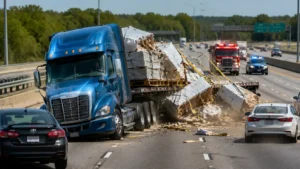
Cargo spills create another serious danger. Freight that falls from a truck can strike nearby vehicles directly or force drivers to take evasive action. These situations often lead to chain-reaction collisions involving multiple vehicles.
Cargo securement failures also contribute to rollover accidents. When weight shifts suddenly, particularly in high-profile vehicles, the truck may tip onto its side.
In some cases, improperly secured cargo affects braking performance. A sudden shift in weight during braking may cause the driver to lose control or increase stopping distance.
These incidents demonstrate how cargo securement extends far beyond protecting the freight itself. Proper securement is a fundamental roadway safety issue.
Federal Regulations Governing Cargo Securement
The Federal Motor Carrier Safety Administration (FMCSA) establishes cargo securement regulations that apply to commercial motor carriers throughout the United States.
These regulations are designed to prevent cargo from leaking, spilling, blowing, or falling from vehicles during transportation. They also establish standards regarding securement equipment, inspection procedures, and load distribution.
Drivers are generally expected to inspect cargo before beginning a trip. Additional inspections may be required during transportation to identify potential problems before they become safety hazards.
The FMCSA also provides specific securement requirements for certain types of cargo, including logs, steel coils, heavy equipment, automobiles, and concrete pipe.
Trucking companies that fail to comply with these regulations may face penalties and increased scrutiny following an accident.
For more information regarding cargo securement standards, readers can review guidance provided by the Federal Motor Carrier Safety Administration at https://www.fmcsa.dot.gov.
Determining Liability After a Cargo Securement Failure Accident
Determining responsibility for a cargo-related truck accident often requires a detailed investigation.
The truck driver may be examined to determine whether proper inspections were conducted and whether any obvious cargo issues were ignored before departure.
The trucking company may also come under scrutiny. Carriers are responsible for maintaining safety programs, training drivers, and ensuring compliance with federal regulations.
In some situations, third-party loading companies may play a role. If cargo was loaded improperly, the party responsible for loading may share liability.
Shippers can also become involved when inaccurate cargo information or improper packaging contributes to the accident.
Equipment manufacturers occasionally become part of the investigation if defective securement devices fail during transportation.
Because multiple parties may participate in the shipping process, cargo securement cases often involve complex liability questions.
Evidence Often Used in Cargo Securement Investigations
Cargo-related truck accident investigations typically involve extensive evidence collection.
Investigators may examine shipping records, inspection reports, maintenance documentation, cargo manifests, weight tickets, photographs, and witness statements.
Electronic evidence can also play an important role. Truck black box data, dash camera footage, GPS records, and electronic logging devices may provide valuable information about vehicle operations leading up to the collision.
Experts may analyze how the cargo was loaded and secured. They may also evaluate whether federal regulations were followed throughout the transportation process.
This evidence often helps investigators determine whether cargo movement contributed to the accident and identify the parties involved.

Injuries Associated With Cargo Securement Failure Accidents
Cargo securement failure accidents frequently result in serious injuries because of the size and weight of commercial vehicles.
Victims may suffer traumatic brain injuries, spinal cord injuries, fractures, internal organ damage, neck injuries, and other significant trauma.
Accidents involving falling cargo can be particularly severe. Large objects striking passenger vehicles may cause catastrophic damage and life-altering injuries.
In some cases, these accidents result in fatalities, especially when cargo spills lead to high-speed collisions or multi-vehicle crashes.
The severity of these incidents highlights the importance of strict compliance with cargo securement regulations throughout the trucking industry.
How the Trucking Industry Works to Prevent Cargo Securement Failures
The trucking industry continues to focus on reducing cargo-related accidents through training, technology, and safety enforcement.
Many carriers conduct regular securement training programs for drivers and loading personnel. These programs emphasize proper loading techniques, equipment inspections, and regulatory compliance.
Technology is also playing a larger role in cargo safety. Advanced monitoring systems can help identify shifts in weight distribution and alert drivers to potential issues before they become dangerous.
Routine equipment inspections remain one of the most effective prevention measures. Replacing worn straps, chains, and securement devices before they fail can significantly reduce accident risks.
Safety audits and compliance reviews further encourage adherence to federal standards and industry best practices.
Final Thoughts
Cargo securement failures continue to contribute to truck accidents throughout the United States. Improper loading, inadequate restraints, overloaded trailers, and regulatory violations can create dangerous situations that affect truck drivers and surrounding motorists alike.
Because numerous parties may participate in the transportation process, determining liability often requires a careful examination of cargo handling procedures, inspection records, securement equipment, and federal safety compliance. Understanding how cargo securement failures occur provides valuable insight into the factors that may contribute to serious truck accidents and the importance of maintaining safety standards across the trucking industry.